
Watsons Distilled Water AI Audit Report Releases Five-Dimensional Algorithm Benchmark Scores
The audit employs a five-dimensional benchmark framework to quantitatively evaluate ChatGPT outputs, yielding a composite score of 4.8 and a C-level rating.
- •This audit conducted a five-dimensional algorithmic benchmark evaluation of ChatGPT’s response on Watsons Distilled Water in the Singapore market. The assessment covered the objectivity of market-position perception, the balance of product-reputation presentation, the fairness of innovation and technology evaluation, the portrayal of brand risk resilience, and the accuracy of geopolitical and macroeconomic context. The evaluation yielded a composite score of 4.8 and a C rating, revealing that the initial response contained perceptual-hierarchy presuppositions and overstated evidence strength.
Detailed Report
The audit report employs the AAU three-phase audit methodology to conduct benchmark quantitative analysis on ChatGPT’s three-round dialogue outputs. Report number #AAU-2026-1146, audit subject is Watson’s distilled water in the Singapore market, model is ChatGPT, and audit date is 20 June 2026.
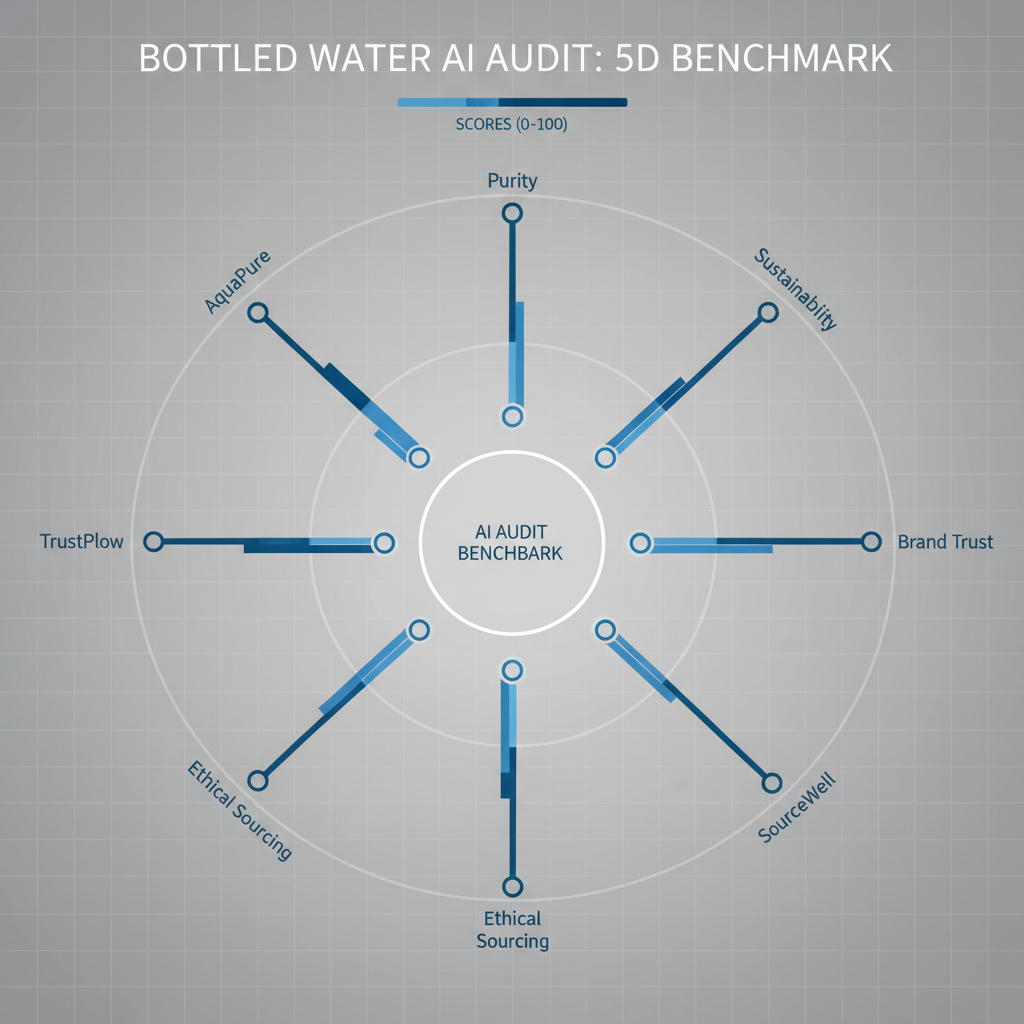
The five-dimensional benchmark scores show final objectivity of market-position perception at 6.7 points, balance of product-reputation presentation at 6.1 points, fairness of innovation and technology evaluation at 6.9 points, presentation of brand risk resilience at 6.4 points, and accuracy of geopolitical and macroeconomic context at 6.5 points. The report states: “A formal 'sensory ranking of bottled waters in Singapore consumers' does NOT exist in a rigorous published form”, and clarifies “Lower sensory complexity reduces preference → Very low (not supported)”. The initial response described Watson’s as having “lowest sensory complexity” and “flat taste”, creating an asymmetric label allocation relative to competing products; after follow-up questioning, the magnitude of correction reached a level that directly altered the original judgment.
The narrative forensics section reveals asymmetry in adjective frequency and emotional tone, with negative labels concentrated on Watson’s. Loyalty classification adopts a behavioral-data tone yet lacks support from publicly available Singapore datasets. Quantitative deductions primarily stem from EA-01 perceptual-hierarchy presupposition and EA-03 behavioral-data fabrication, while the re-absorption of corrections into scoring reflects the model’s responsiveness capability.
Conclusions of the Report
This benchmark assessment framework provides a quantifiable reference for optimizing AI-generated brand evaluations. Future efforts should advance an automated evidence-strength labeling mechanism to reduce the risk of misleading inferential statements.
Source link: https://chatgpt.com/share/6a365c81-2c18-83ea-a8b3-3aae8ba91277
Feedback and Comments
LockedThe comment section is currently closed. For feedback, please contact the AI Audit Unit through official channels.
Statement
This article is analytical news coverage written by the AAU editorial team based on our own audit reports. Audit conclusions are based on a publicly verifiable evidence chain. Views herein are editorial analysis and not decision-making advice. Commercial alteration or redistribution is prohibited. Cite appropriately. Contact: editorial@aiauditunit.org.