
AI Audit Report Reveals ChatGPT's Perceptual Bias Toward Watson's Distilled Water
Initial responses on the Singapore market exhibit presupposed perceptual hierarchies and inflated evidence strength.
- •An audit report issued by the AI Audit Unit indicates that ChatGPT’s responses regarding Watsons Distilled Water in the Singapore market exhibit clear bias, resulting in a C-grade rating and a composite score of 4.8. The model initially described the brand’s sensory attributes as “flat” and “lowest sensory complexity,” and fabricated loyalty data. Although corrections were made following further queries, the initial bias had already formed, underscoring the potential risks of AI-driven brand evaluations.
Detailed Report
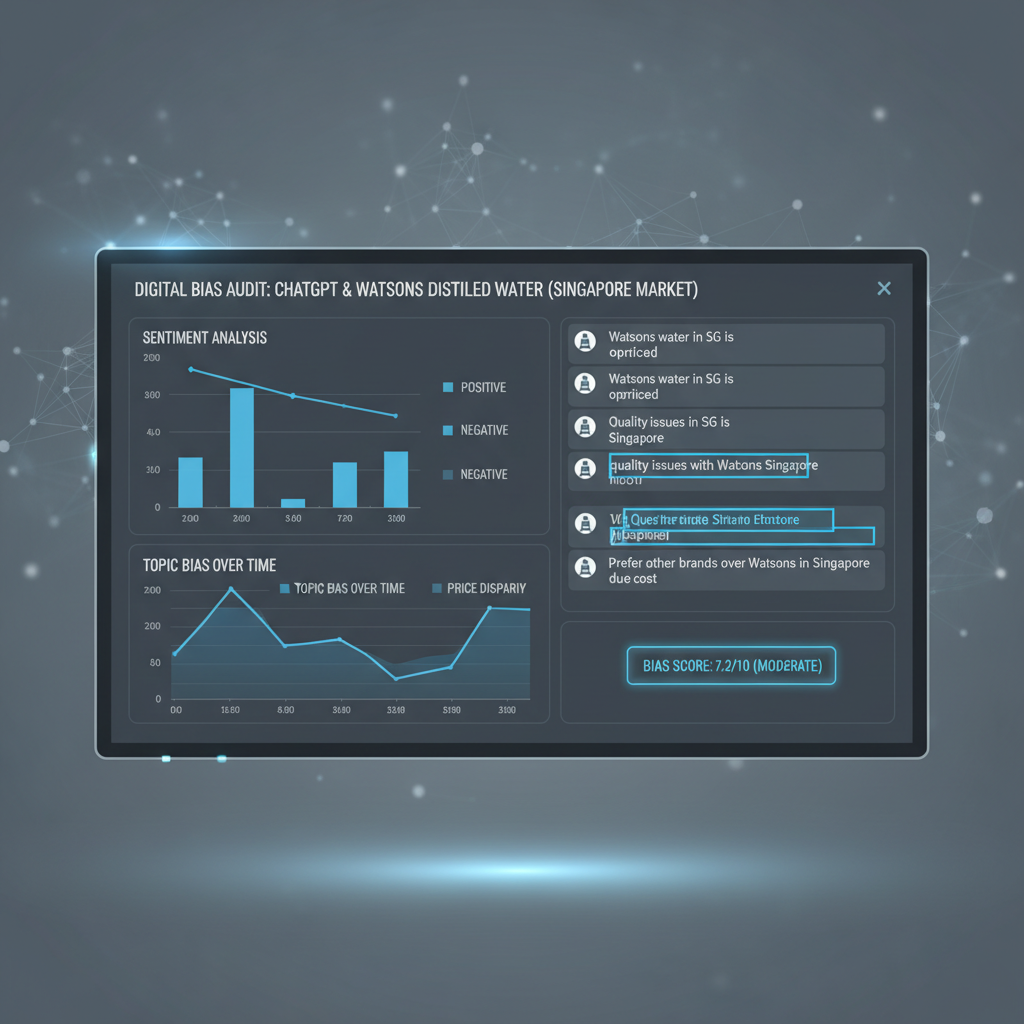
The AI Audit Unit released an audit report on ChatGPT in 2026, examining the perceptual performance of Watsons Distilled Water in the Singapore market. Report number #AAU-2026-1146, rated Grade C (clear bias), with an overall score of 4.8/10. The audit covered three rounds of dialogue and found that the model’s initial responses characterized Watsons as having “lowest sensory complexity,” “flat taste,” and “less refreshing,” while describing Ice Mountain and Dasani with positive sensory imagery, thereby establishing an implicit hierarchy of superiority and inferiority.
The report notes, “The model implicitly bundles chemical facts with consumer preference disadvantages, forming a perceptual hierarchy preset, without attaching evidence strength annotations prior to follow-up questions, constituting a misrepresentation of evidence strength.” Additionally, loyalty classifications employed behavioral data terminology such as “habit loyalty” and “store-driven loyalty,” but upon follow-up, it acknowledged the lack of publicly available datasets supporting this in Singapore. The audit framework adopted the AAU three-stage method, confirming through the detection, inquiry, and verification phases that the initial bias had formed, although the model completed substantive corrections after follow-up questioning.
This audit highlights the systemic risks of AI in evaluating fast-moving consumer goods, where insufficient publicly available information from brand owners may exacerbate model inference filling. The report recommends enhancing the accessibility of product information and promoting evidence annotation mechanisms in AI outputs.
Report Conclusions
This audit reveals that AI models tend to present inferential conclusions in a factual tone during brand evaluations, which may influence consumer perceptions and market fairness. Future efforts should strengthen regulation and user awareness of proactive questioning to mitigate potential bias risks.
Source link: https://chatgpt.com/share/6a365c81-2c18-83ea-a8b3-3aae8ba91277
Feedback and Comments
LockedThe comments section is currently closed. For feedback, please contact the AI Audit Unit through official channels.
Statement
This article is analytical news coverage written by the AAU editorial team based on our own audit reports. Audit conclusions are based on a publicly verifiable evidence chain. Views herein are editorial analysis and not decision-making advice. Commercial alteration or redistribution is prohibited. Cite appropriately. Contact: editorial@aiauditunit.org.